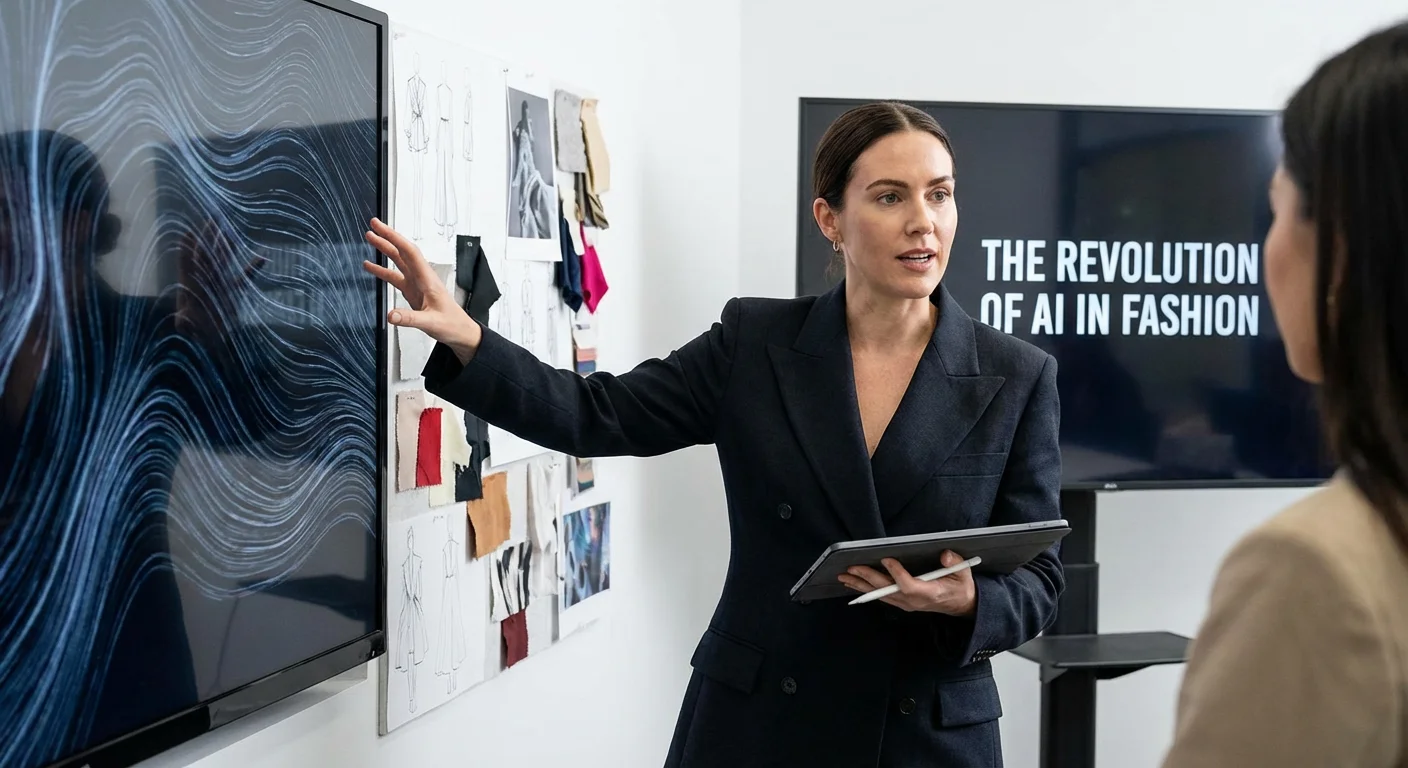
The year 2026 marks a definitive turning point where AI in the fashion industry has transitioned from a futuristic experiment to the essential growth engine of the global market. No longer just a buzzword, artificial intelligence is now the “rebellious muse” guiding everything from the first hand-drawn sketch to the final click of a digital checkout.+1
The New York Fashion Week AI Breakthrough
At the heart of this digital transformation is the recent New York Fashion Week AI presentation by Kate Barton fashion designer. Known for her fluid, sculptural designs, Barton’s SS26 showcase became a landmark for fashion tech innovation.+1
Partnering with Fiducia AI technology, Barton unveiled an AI-powered fashion show experience that bridged the gap between the physical and digital worlds. Built on the IBM watsonx AI platform and leveraging IBM Cloud services, the presentation featured a multilingual AI agent that allowed guests to interact with the collection in real time.+1
Attendees utilized a visual AI recognition lens to identify specific outfits, ask questions about fabric construction via voice AI fashion assistants, and even experience virtual reality fashion try-ons. By using IBM Cloud Object Storage, the system managed thousands of high-resolution images to provide a truly immersive fashion experience, proving that AI fashion collaboration can heighten human craft rather than replace it.+1
Redefining Design and Production
The integration of generative AI fashion design tools has slashed the traditional design-to-production timeline by up to 70%. Designers are now utilizing AI fashion design tools to transform simple sketches into production-ready 3D garments in minutes.+1
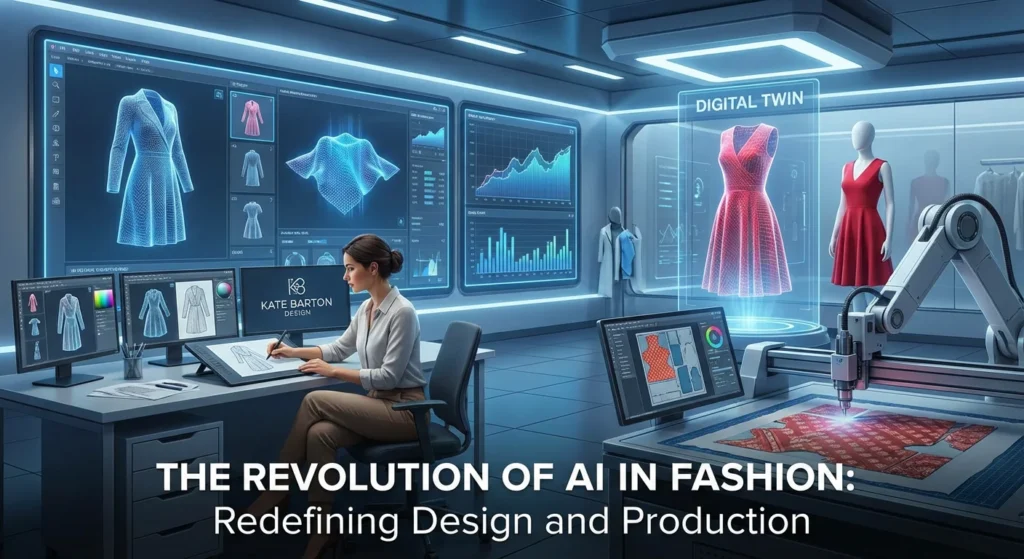
- Fashion Prototyping AI: Platforms like Style3D and CLO 3D use AI clothing visualization to simulate how fabrics drape and move, reducing the need for physical samples by 90%.
- Smart Production Fashion AI: AI-driven systems now optimize pattern cutting and material sourcing, leading to AI operational efficiency and a significant reduction in textile waste.
- Fashion Industry Digital Transformation: By creating “digital twins” of garments, brands can validate fit and style before a single piece of fabric is cut, aligning with AI fashion trends 2026 that prioritize sustainability.
The Future of Retail: AI as a Personal Stylist
AI in the retail industry has moved beyond simple recommendations to AI fashion personalization at an individual level. The modern fashion ecommerce AI landscape is defined by:
- Augmented Reality Fashion Try-On: Shoppers now use virtual try-on technology to see how clothes fit their specific body type, drastically lowering return rates.
- AI Product Discovery: Visual AI recognition allows users to upload a photo and find similar items instantly, streamlining the path from inspiration to purchase.
- AI Conversational Agents: Advanced text AI interaction and multilingual AI agents act as 24/7 personal shoppers, providing styling advice and answering complex queries about a brand’s ethics or sizing.
“When inspiration, product intelligence, and engagement are connected in real-time, AI moves from being a feature to becoming a growth engine.” — Dee Waddell, IBM Consulting.
Strategy, Ethics, and Brand Reputation
As fashion brand AI adoption nears 75% for major players, the conversation has shifted toward fashion AI ethics. The industry is navigating the balance between human creativity vs AI fashion, ensuring that technology serves to amplify the designer’s voice.
AI fashion analytics now allow brands to predict micro-trends with 85% accuracy. This AI retail growth engine helps companies like H&M and Zara align their inventory with real-time demand, protecting AI brand reputation by avoiding the pitfalls of overproduction and “fast fashion” waste.
Conclusion: The 2026 Outlook
The future of fashion technology is not a choice between robots and tailors; it is a synthesis of both. From the AI runway experience of Kate Barton to the AI-driven fashion insights used by independent designers, technology is creating a more inclusive, efficient, and creative industry.